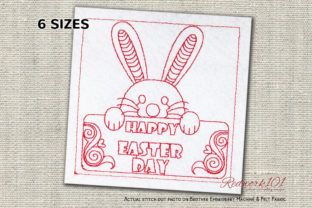
Review: Happy Easter Day Redwork for Handmade Gifts
As an embroidery designer who has spent countless hours hooping, stitching, and troubleshooting, I have learned that the best designs are not always the most complex. Sometimes, simplicity is the ultimate sophistication. This is exactly what struck me when I first opened the Happy Easter Day Redwork file on Creative Fabrica. In a market saturated with dense, multi-colored satin stitches, this lineart design offers a refreshing return to classic charm. It feels sweet, nostalgic, and effortlessly elegant, making it a perfect candidate for artisans looking to create meaningful, personalized gifts.
The Visual Appeal of Classic Lineart
The first impression of Happy Easter Day Redwork is one of visual softness. Redwork, traditionally done in red thread on white fabric, relies entirely on the quality of the line and the spacing of the stitches. This design captures that handmade charm beautifully. The lines are clean and deliberate, avoiding the clutter that often plagues digital conversions. For those who appreciate a cozy, classic aesthetic, this embroidery design delivers a sense of warmth that feels both seasonal and timeless.
What makes this particular file stand out is its versatility. While it is categorized under Easter, the playful yet refined nature of the artwork allows it to transcend strict holiday boundaries. It feels modern enough for contemporary home decor but traditional enough to serve as a cherished family keepsake. For Etsy sellers and small business owners, this dual appeal is invaluable. It allows you to market the same design for spring celebrations while maintaining a style that fits into everyday nursery decor or kitchen textiles.
Practical Applications for Your Shop
When evaluating a new digital embroidery file, I always ask myself: "Where does this live in the real world?" For Happy Easter Day Redwork, the answers are plentiful. Because the design is primarily line-based, it works exceptionally well on items where bulk is a concern. Here are several ways I envision using this design in a professional setting:
- Baby Embroidery: The lightweight nature of redwork is ideal for delicate baby blankets and onesies. It adds a personalized touch without creating a stiff patch that might irritate sensitive skin.
- Embroidered Towels and Aprons: Kitchen linens benefit from designs that wash well. Single-color runs mean fewer thread breaks and a cleaner finish on textured terry cloth or cotton.
- Pillow Covers and Home Decor: Imagine this stitched in a deep crimson on a natural linen pillow cover. It creates a striking contrast that elevates a simple cushion into a statement piece for spring living rooms.
- Tote Bags and Custom Gift Boxes: For craft fair products, this design stitches quickly, allowing for higher production volume. It looks charming on canvas totes or as a decorative element on custom gift packaging.
For wedding gift creators, do not overlook the potential here. A monochromatic version of this design, perhaps stitched in silver or gold thread on a high-quality handkerchief or guest book cover, could serve as a subtle, elegant nod to the season if the timing aligns. It demonstrates that a machine embroidery design can be adapted for various emotional tones depending on your thread color choices.
Technical Considerations for Quality Results
While Happy Easter Day Redwork is user-friendly, achieving a professional finished product requires attention to detail. As an experienced stitcher, I recommend considering the following technical aspects before starting your project:
- Fabric Texture and Stabilizer: Redwork highlights every imperfection. If you are stitching on a textured towel or a stretchy baby garment, your stabilizer choice is critical. Use a cut-away stabilizer for knits to prevent distortion, and a tear-away for woven fabrics like linen or cotton. Always test on a scrap piece of your actual fabric first.
- Thread Color Contrast: Since this is a lineart design, contrast is key. Ensure your thread color stands out against the background fabric. Dark fabrics may require careful planning; consider using a lighter thread or adding a backing patch if the fabric is too dark for the thread to pop.
- Stitch Density and Small Details: Review the stitch density in your software. Lineart designs should not be overly dense, or they will pucker the fabric. Check small details after stitching a test run. If tiny elements are pulling or distorting, adjust your tension or stabilize further.
- Hoop Size and Placement: Confirm the hoop size required for the design. While redwork is often compact, ensure your hoop fits the item you are embroidering, especially if working on bulky items like blanket edges or tote bag handles.
It is also vital to remember that this machine embroidery design comes with multiple embroidery file formats and can be used in multiple embroidery machines. However, always verify the specific format compatibility with your machine model. Additionally, review the license terms on Creative Fabrica before selling finished products to ensure your commercial embroidery plans align with the creator's policies.
Building Trust Through Handmade Quality
In the world of online sales, perceived quality drives buyer engagement. A clean, well-executed redwork design signals craftsmanship. It shows that you care about the durability and aesthetic of your handmade product. When customers see a crisp, unwrinkled stitch-out of Happy Easter Day Redwork on a high-resolution printable mockup or in your product photography, they trust the seller.
This design enhances the giftability of your items. Whether it is a nursery item for a new parent or a decorative piece for a hostess, the emotional value of a personalized, hand-stitched look cannot be overstated. It transforms a generic commodity into a unique treasure. For digital product sellers, offering this as part of a bundle or using it to create sample projects can boost your shop's credibility.
Ultimately, Happy Easter Day Redwork is more than just a seasonal graphic. It is a versatile tool for the creative entrepreneur. By focusing on proper stabilizer use, thread selection, and fabric preparation, you can produce stunning results that resonate with customers. It is a reminder that in embroidery, as in life, sometimes less is truly more. Embrace the simplicity, respect the technique, and let this design bring a touch of classic joy to your next creative project.