Pig Standing in Field Redwork: A Designer’s Review
As an embroidery designer who has spent years digitizing and testing files for commercial use, I approach every new machine embroidery design with a critical eye. It is not just about whether the image looks cute on a screen; it is about how that design performs under the needle, how it holds up after washing, and most importantly, how it serves the brand identity of the small business using it. Today, I am reviewing Pig Standing in Field Redwork, a piece categorized under Wild Animals and Embroidery, to determine its viability for branded merchandise and professional application.
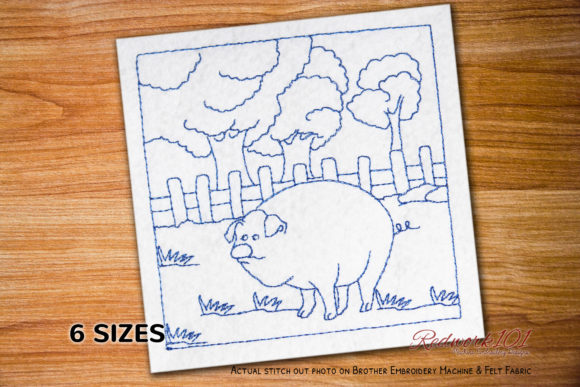
The first impression of Pig Standing in Field Redwork is one of rustic charm and simplicity. The term "Redwork" historically refers to monochromatic embroidery, often using red thread on white fabric, which evokes a sense of tradition, handmade quality, and farmhouse aesthetics. For a small business owner, this visual personality is powerful. It does not scream "corporate"; instead, it whispers "artisan," "local," and "authentic." This makes it an excellent candidate for boutiques, bakeries, florists, and creative studios that want to project a warm, approachable, and grounded image.
Evaluating Visual Impact for Brand Identity
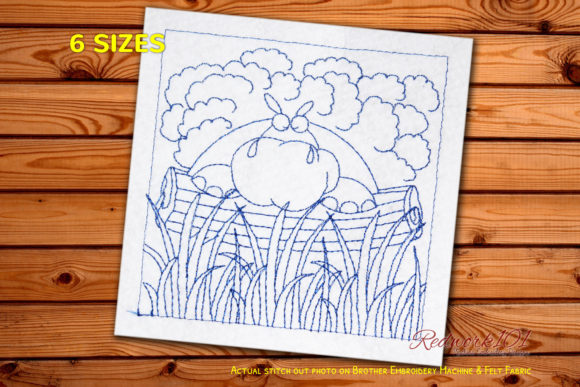
When considering Pig Standing in Field Redwork for your brand identity, you must look beyond the subject matter. The pig standing in a field suggests stability, nature, and perhaps a connection to agriculture or organic products. If you run a pet brand, a local farm-to-table café, or a handmade soap company, this design aligns perfectly with your narrative. The simplicity of the outline ensures that the design remains legible even when scaled down, which is crucial for maintaining professionalism across various touchpoints.
However, the description notes that "The Box Stitch shown in the picture is optional." This is a significant detail for a designer. An outer box can frame the design, giving it a badge-like appearance suitable for patches, but it can also add unnecessary stitch count and bulk if not needed. The ability to skip the color of the outer box allows for greater versatility. You can integrate the pig seamlessly into a larger composition or let it stand alone as a minimalist accent. This flexibility is vital for creating consistent design assets that work on both light and dark backgrounds.
Real-World Applications for Small Business Merch
Let us discuss where Pig Standing in Field Redwork truly shines in a commercial setting. For small business merch, versatility is key. Here is how I envision this design performing across different products:
- Embroidered Patches: This is perhaps the strongest use case. The clean lines of redwork translate beautifully into woven or embroidered patches. These can be sewn onto denim jackets, canvas bags, or aprons, allowing customers to customize their own gear while promoting your brand.
- Apron Embroidery: For bakeries and craft studios, staff uniforms are walking billboards. Placing this design on the chest pocket of an apron adds a touch of whimsy without overwhelming the garment. The single-color nature of redwork keeps production costs lower and turnaround times faster.
- Tote Bag Design: Canvas tote bags are a staple for eco-conscious brands. The rustic feel of the pig in the field complements the natural texture of canvas. Ensure you use a heavy cut-away stabilizer to prevent puckering on the loose weave of the fabric.
- Cap Embroidery: While possible, cap fronts are curved and unforgiving. If you choose to use this design on hats, ensure the width is narrow enough to fit the standard 2.5-inch height constraint of most cap frames. Simplify any tiny details in the field grass to avoid thread breaks.
For Etsy sellers and handmade product creators, this digital embroidery file can be used to create unique value-added items. Imagine a set of kitchen towels with this motif, or a branded label on a jar of homemade jam. It elevates a simple product into a handmade product with perceived higher value.
Technical Considerations and Production Notes
Before you purchase and start stitching, there are technical realities to address. The description mentions that the color of the outer box is different in most designs unless it is part of the design itself. This implies that the file may have multiple color stops. As a professional, I advise you to open the file in your embroidery software and simulate the stitching order. Check if the box stitch is truly optional or if removing it leaves open ends that need securing.
Stitch density is another critical factor. Redwork typically uses running stitches or satin stitches with low density. While this is great for softness, it can be fragile on items that undergo frequent industrial washing, such as restaurant uniforms. To mitigate this, consider adding a subtle backing or choosing a polyester thread that offers higher tensile strength than rayon.
Fabric texture also plays a role. On smooth cotton or linen, Pig Standing in Field Redwork will look crisp and defined. On textured fabrics like terry cloth or heavy wool, the fine lines might get lost. Always test on the actual material you intend to use. Do not rely solely on a printable mockup; physical testing reveals issues with tension and registration that screens cannot show.
Strategic Placement and Size Constraints
Where you place the design determines its effectiveness. For a chest logo accent, keep the size between 2 and 3 inches wide. This ensures visibility without looking cluttered. For sleeve details, a smaller 1.5-inch version can act as a subtle brand mark. Avoid using this design on areas with high friction, such as the lower back of a shirt or the knees of pants, as the thin lines of redwork are more prone to snagging than dense fill-stitch designs.
If you are using this for custom apparel involving dark uniforms, remember that traditional redwork is designed for light fabrics. You will need to adjust the thread colors for contrast. A bright white or yellow thread on a navy blue shirt can maintain the visibility of the outline, but you must check the color change settings in your embroidery file to ensure the machine stops at the right points for color swaps.
Final Verdict for Commercial Use
Pig Standing in Field Redwork is a strong contender for businesses aiming to project a friendly, rustic, and authentic vibe. It is not suitable for high-tech or luxury minimalist brands, but for those in the food, craft, pet, or lifestyle sectors, it offers immense value. The key to success lies in proper preparation.
- Check Licensing: Confirm the commercial licensing terms included with the file. Ensure you are allowed to sell finished products made with this design.
- Verify Hoop Size: The description does not specify exact hoop sizes. Check the file details to ensure it fits your machine’s smallest and largest hoops, giving you flexibility for patches versus full-back shirts.
- Create Mockups: Before committing to a large run, create a physical sample. Compare it beside other design assets to ensure visual consistency across your product line.
- Test Washability: Wash and dry the test piece three times. Inspect for thread breakage or fabric distortion. This step builds customer trust by ensuring durability.
In conclusion, Pig Standing in Field Redwork is more than just a decorative image; it is a versatile tool for storytelling through commercial embroidery. By understanding its technical limits and leveraging its aesthetic strengths, you can create memorable finished product lines that resonate with your audience. Whether used on a tote bag, a patch, or an apron, this design has the potential to become a recognizable symbol of your brand’s commitment to quality and charm.